Community Science InstituteCommunity Science InstituteCommunity Science InstituteCommunity Science Institute
  • News & Events
    • CSI Updates, News & Blog Posts
    • CSI’s Public Comments & Testimonies
    • CSI in the Media
  • Test Your Water
    • Water Testing FAQs
    • Potable and Non-Potable Water Tests & Fees
    • Instructions for Collecting and Submitting Water Samples
    • Drinking Water Resources for the General Public
    • Water Testing Assistance Program
  • Get Involved
    • Volunteer With Us!
    • Monitoring Partnerships
      • Harmful Algal Bloom Monitoring on Cayuga Lake
      • Synoptic Sampling
      • Biological Monitoring
      • Owego Creek Tributaries Monitoring Project with Trout Unlimited
      • Past CSI Monitoring Programs
        • Red Flag Monitoring
  • Outreach & Education
    • Journey of Water
      • Learning Materials
    • Public Events and Presentations
    • Publications
  • Water Quality Database
    • Database Home
    • Streams and Lakes Data
      • Cayuga Lake Region
      • Seneca Lake Region
      • Upper Susquehanna River Region
      • Select and Download Streams and Lakes Data
    • Cayuga Lake Harmful Algal Bloom Tracker
      • Select and Download Cayuga Lake HABs Data
    • Pre-Fracking Groundwater Baselines
      • Select and Download Groundwater Baselines
    • Biological Monitoring Results
    • Glossary
  • Donate
    • CSI’s Business Membership Program
      • 2026-2027 Business Membership Partners
      • 2025-2026 Business Membership Partners
  • About Us
    • CSI Frequently Asked Questions
    • Meet Our Staff
    • Meet Our Board of Directors
    • CSI’s Mission & Vision Statements
    • CSI’s DEI Statement
    • Annual Reports
    • Contact Us
    • Employment Opportunities

Harmful Algal Blooms: What they are, how to spot them, and what to do if you suspect you’ve encountered a bloom

    Home News Harmful Algal Blooms: What they are, how to spot them, and what to do if you suspect you’ve encountered a bloom
    NextPrevious
    Harmful_Algal_Bloom

    Harmful Algal Blooms: What they are, how to spot them, and what to do if you suspect you’ve encountered a bloom

    By abnerx | News | Comments are Closed | 31 July, 2017 | 1

    Harmful algal blooms (HABs) are concentrated growths of cyanobacteria. They are commonly called blue-green algae, but they are really bacteria, a more primitive life form than algae. Blue-green algae are one of the earliest forms of life on earth. They have been around for about 500 million years. They are a very diverse group of organisms, and there are many different species. They are present in water everywhere, both fresh water and sea water, but usually in low concentrations. Some species produce toxins and some do not. The toxins themselves are very diverse and can have a variety of health effects. Depending on the species of blue-green algae and the type of toxin it produces, contact with high concentrations in blooms could result in skin rashes while ingestion could result in fatal liver toxicity.

    An algal bloom consists of a concentrated growth of any species of algae or cyanobacteria in a water body. A bloom can be a small patch of algae or it can cover many acres of water. Nobody really understands what triggers a population of any species of algae or blue-green algae to suddenly proliferate into a bloom. Phosphorus and nitrogen nutrients are thought to play a role, but there are almost certainly other factors at work, as well. Many algal blooms are what are referred to as Nuisance Algal Blooms, or NABs, because they do not produce toxins and do not present a health risk. Blooms of blue-green algae (cyanobacteria) may or may not produce toxins, depending on the species. It is best to avoid contact with any algal bloom that looks like it might be caused by cyanobacteria, because it could be a toxin-producing species that presents a  health risk.

    Harmful algal blooms generally have a distinctive appearance. The NYSDEC and NYSDOH maintain excellent websites on HABs that you can use to learn what HABs look like and how to report a bloom that you think is suspicious. Once you report a suspicious bloom, including photos, if possible, NYSDEC and/or NYSDOH will evaluate the evidence you provide and send somebody out to collect a sample if they agree it could be a HAB.

    Some lakes take part in a volunteer HABs surveillance program that is operated by the NYSDEC (www.dec.ny.gov/chemical/77118). The Cayuga Lake Watershed Network, the Community Science Institute and others are in the process of organizing a volunteer HABs surveillance program for Cayuga Lake. If you are interested in participating, please contact Claire Weston, Outreach Coordinator at the Community Science Institute, at claire.weston@communiyscience.org, or Hilary Lambert, the Cayuga Lake Watershed Steward, at steward@cayugalake.org.
     kjjjjjjjjjjjjjjjjjjjjjjjjjjjjjjjjjjjjjjjjjjjjjjjjjjjjjjjjjjjjjjjjjjjjjjjjjjjjjjjjjjjjjjjjjjjjjjjjjjjjjjjjjjjjjjjjjjjjjjjjjjjjjjjjjjjjjjjjjjjjjjjjjjjjjjjjjjjjjjjjjjjjj

    Frequently Asked Questions courtesy of the Cayuga Lake Watershed Network:

    Harmful Algae Blooms (HABs) have been reported on the Cayuga Lake shoreline since mid-July 2017. They may persist until cold weather arrives. Read the information below and watch for updates. Find out what HABs are, why they are dangerous, what they look like, who to contact if you think you have found one, and who to contact to find out if your favorite beach is closed, and when it might re-open.

    1. What is a Harmful Algae Bloom:
      1. Click on link http://www.dec.ny.gov/chemical/77118.html to learn what a Harmful Algae Bloom (HAB) is, what causes it, and why you should STAY AWAY from them. Pets and kids too!!
    2. Why HABs are dangerous/what to do if you are in contact with one: 
      1. Click on link to the website www.health.ny.gov/harmfulalgae . It provides advice to avoid contact with blue-green algae blooms and information for people who may have been exposed. If you experience health symptoms, we recommend that you consider discussing these with your health care provider. If you believe your symptoms are associated with exposure to a HAB, please report them to your local health department (www.health.ny.gov/EnvironmentalContacts ) or NYS DOH (harmfulalgae@health.ny.gov ).
    3. What does a HAB look like?
      1. Click on this link: http://www.dec.ny.gov/chemical/81962.html
    4. What to do if you think you have found a HAB outbreak:
      1. If you suspect that you have seen a HAB, please report the bloom to the NYS DEC. Fill out and submit a Suspicious Algal Bloom Report Form. Email the completed form and, if possible, attach digital photos (close-up and landscape to show extent and location) of the suspected bloom, to HABsInfo@dec.ny.gov. Please report any health symptoms to NYS Health Department at harmfulalgae@health.ny.gov  and your local health department.Please report any health symptoms to NYS Health Department at harmfulalgae@health.ny.gov  and your local health department.
    5. If you are not sure whether or not it is a HAB, follow this advice: 
      1. People, pets and livestock should avoid contact with any floating mats, scums, or discolored water. Colors can include shades of green, blue-green, yellow, brown or red.
      2. Never drink, prepare food, cook or make ice with untreated surface water, whether or not algae blooms are present. In addition to toxins, untreated surface water may contain bacteria, parasites or viruses that could cause illness if consumed.
      3. People not on public water supplies should not drink surface water during an algal bloom, even if it is treated, because in-home treatments such as boiling, disinfecting water with chlorine or ultraviolet (UV), and water filtration units do not protect people from HABs toxins.
    6. Where have HABs been found on Cayuga Lake this summer?
      1. Since mid-July, HABs have been reported at the Village of Aurora swimming beach, Frontenac Park in Union Springs, Taughannock Falls State Park, Myers Park, and several other locations on both the east and west shorelines. Some of these are “potential” HABs, being observed carefully, and we advise you to not use these sites until the threat has vanished. These sites are all posted with warning signs by the county health departments. The NYS DEC updates their statewide list of HABs each week, but these lists are not detailed:http://www.dec.ny.gov/chemical/83310.htmlWe – the Cayuga Lake Watershed Network, Community Science Institute, NYS DEC, Floating Classroom, county health departments, municipalities – will try to provide you with an updated list once or twice a week. You may want to call your local township or village office in advance of going swimming at a favorite spot. We will be organizing volunteer monitoring and reporting teams around the lake. Contact steward@cayugalake.org  or claire.weston@communityscience.org to get involved.


    Resources:

    • CSI Resources:
      • Printable HABs  information flyer
    • New York Department of Environmental Conservation Resources:
      • Harmful Algal Bloom: General Information
      • Harmful Algal Blooms Photo Gallery
      • Harmful Algal Blooms Notifications Page
      • Harmful Algal Blooms Frequently Asked Questions
      • Harmful Algal Blooms Additional Information
    • New York State Department of Health Resources:
      • Blue-green Algae and Health
    • Media Resources:
      • syracuse.com, July 18th, 2017: Cayuga County Dept of Health closes two Cayuga Lake beaches 
      • Tompkins County Health Department press release, July 24th, 2017: Health department warns of suspicious algal blooms in water
      • Ithaca Voice, July 25th, 2017: DEC monitoring suspicious algal blooms in Cayuga Lake 
      • Cayuga County information on HABs: Harmful Algal Blooms

    Loading

    Share
    No tags.

    abnerx

    More posts by abnerx

    Related Posts

    • CSI is hiring: Office Administrator

      By Alyssa Johnson | 0 comment

      The Office Administrator will play a vital role in supporting the smooth day-to-day operations of Community Science Institute. They will be responsible for a variety of administrative and laboratory-support tasks including providing excellent customer service,Read more

      Loading

    • From Community Report to Regulatory Action

      By Grascen Shidemantle | 0 comment

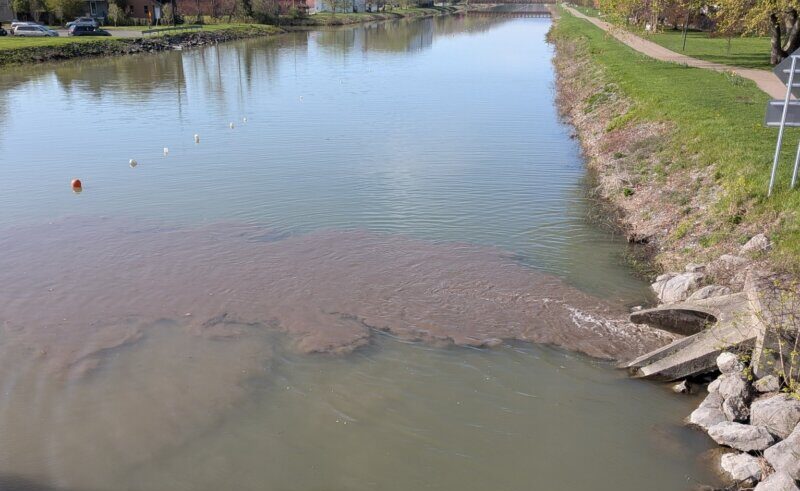
      CSI’s Outreach & Programs Coordinator, Alyssa Johnson, collects a sample from Cliff Brook Park on 4/23/26. On April 23, CSI received an email from a concerned community member who had noticed a cloudy, dark brownRead more

      Loading

    • No Fish Too Big, No Macroinvertebrate Too Small: A Celebration of Interdisciplinary Environmental Science

      By Jared Thomas | 0 comment

      The SUNY College of Environmental Science and Forestry (ESF) held its first annual meeting of their University Chapter of the American Fisheries Society. Their motto, “No Fish too Big, No Macroinvertebrate too Small”, perfectly encapsulatedRead more

    • Why we volunteer as HAB Harriers

      By Alyssa Johnson | 0 comment

      Please enjoy this article written by one of CSI’s longterm HABs Harriers, James Edwards. This article was first included in the 7th HABs Newsletter of the 2025 season, compiled by the Cayuga Lake Watershed Network.Read more

    • Save the Date: “HAB-by Hour” at Cayuga Shoreline

      By Alyssa Johnson | 0 comment

      Read more

    NextPrevious

    Recent Posts

    • CSI is hiring: Office Administrator
    • From Community Report to Regulatory Action
    • Upcoming Harmful Algal Bloom Presentations
    • CSI’s 2026 Data Jam: Investigating Local Water Quality
    • No Fish Too Big, No Macroinvertebrate Too Small: A Celebration of Interdisciplinary Environmental Science

    Recent Comments

    • Nathaniel Launer on Harmful Algal Blooms (HABs) on Cayuga Lake: A Public Presentation at Lansing Town Hall
    • Nathaniel Launer on The 2019 Harmful Algal Bloom (HABs) Monitoring Program on Cayuga Lake
    • sr.yurmagazine.com on Presentation at the Cayuga Lake Watershed Network 2019 Fall Community Conference
    • Justin Hamilton on The 2019 Harmful Algal Bloom (HABs) Monitoring Program on Cayuga Lake
    • SEO Service on The Fall 2019 edition of The Water Bulletin

    Archives

    • July 2026
    • May 2026
    • February 2026
    • January 2026
    • August 2025
    • May 2025
    • March 2025
    • December 2024
    • November 2024
    • August 2024
    • January 2024
    • June 2023
    • January 2023
    • September 2022
    • August 2022
    • June 2022
    • February 2022
    • January 2022
    • December 2021
    • November 2021
    • October 2021
    • September 2021
    • August 2021
    • April 2021
    • January 2021
    • December 2020
    • November 2020
    • September 2020
    • August 2020
    • July 2020
    • March 2020
    • February 2020
    • December 2019
    • November 2019
    • October 2019
    • September 2019
    • August 2019
    • May 2019
    • April 2019
    • March 2019
    • December 2018
    • November 2018
    • October 2018
    • September 2018
    • July 2018
    • May 2018
    • March 2018
    • December 2017
    • November 2017
    • October 2017
    • September 2017
    • August 2017
    • July 2017
    • June 2017
    • May 2017
    • April 2017
    • March 2017
    • November 2016
    • October 2016
    • August 2016
    • April 2016
    • March 2016
    • February 2016
    • October 2015
    • June 2015
    • May 2015
    • April 2015
    • March 2015
    • February 2015
    • January 2015
    • December 2014
    • November 2014
    • October 2014
    • September 2014
    • August 2014
    • July 2014
    • June 2014
    • May 2014
    • April 2014
    • March 2014
    • February 2014
    • January 2014
    • December 2013
    • October 2013
    • April 2013
    • March 2013
    • August 2012
    • July 2012
    • June 2012
    • April 2012

    Categories

    • "Red Flag" Monitoring
    • Biological Monitoring (BMI)
    • Blog
    • Cayuga Lake Watershed
    • Donation
    • Events
    • Groundwater
    • Harmful Algal Blooms
    • Help
    • Human
    • Laboratory
    • Nature
    • News
    • Outreach
    • Uncategorized
    • Volunteering
    • Water
    • Water Testing

    Meta

    • Log in
    • Entries feed
    • Comments feed
    • WordPress.org

    Connect With Us

    The Community Science Institute
    Langmuir Lab Building, Box 1044
    95 Brown Rd. Ithaca, NY 14850

    (607) 257-6606
    info@communityscience.org

    Support Our Work

    Donate

    Recent Posts

    • CSI is hiring: Office Administrator

      The Office Administrator will play a vital role in supporting the smooth

      Loading

      20 July, 2026
    • From Community Report to Regulatory Action

      CSI’s Outreach & Programs Coordinator, Alyssa Johnson, collects a sample from Cliff

      Loading

      6 May, 2026
    • News & Events
      • CSI Updates, News & Blog Posts
      • CSI’s Public Comments & Testimonies
      • CSI in the Media
    • Test Your Water
      • Water Testing FAQs
      • Potable and Non-Potable Water Tests & Fees
      • Instructions for Collecting and Submitting Water Samples
      • Drinking Water Resources for the General Public
      • Water Testing Assistance Program
    • Get Involved
      • Volunteer With Us!
      • Monitoring Partnerships
        • Harmful Algal Bloom Monitoring on Cayuga Lake
        • Synoptic Sampling
        • Biological Monitoring
        • Owego Creek Tributaries Monitoring Project with Trout Unlimited
        • Past CSI Monitoring Programs
          • Red Flag Monitoring
    • Outreach & Education
      • Journey of Water
        • Learning Materials
      • Public Events and Presentations
      • Publications
    • Water Quality Database
      • Database Home
      • Streams and Lakes Data
        • Cayuga Lake Region
        • Seneca Lake Region
        • Upper Susquehanna River Region
        • Select and Download Streams and Lakes Data
      • Cayuga Lake Harmful Algal Bloom Tracker
        • Select and Download Cayuga Lake HABs Data
      • Pre-Fracking Groundwater Baselines
        • Select and Download Groundwater Baselines
      • Biological Monitoring Results
      • Glossary
    • Donate
      • CSI’s Business Membership Program
        • 2026-2027 Business Membership Partners
        • 2025-2026 Business Membership Partners
    • About Us
      • CSI Frequently Asked Questions
      • Meet Our Staff
      • Meet Our Board of Directors
      • CSI’s Mission & Vision Statements
      • CSI’s DEI Statement
      • Annual Reports
      • Contact Us
      • Employment Opportunities
    Copyright 2015 Tranmautritam's team | All Rights Reserved
    • News & Events
      • CSI Updates, News & Blog Posts
      • CSI’s Public Comments & Testimonies
      • CSI in the Media
    • Test Your Water
      • Water Testing FAQs
      • Potable and Non-Potable Water Tests & Fees
      • Instructions for Collecting and Submitting Water Samples
      • Drinking Water Resources for the General Public
      • Water Testing Assistance Program
    • Get Involved
      • Volunteer With Us!
      • Monitoring Partnerships
        • Harmful Algal Bloom Monitoring on Cayuga Lake
        • Synoptic Sampling
        • Biological Monitoring
        • Owego Creek Tributaries Monitoring Project with Trout Unlimited
        • Past CSI Monitoring Programs
          • Red Flag Monitoring
    • Outreach & Education
      • Journey of Water
        • Learning Materials
      • Public Events and Presentations
      • Publications
    • Water Quality Database
      • Database Home
      • Streams and Lakes Data
        • Cayuga Lake Region
        • Seneca Lake Region
        • Upper Susquehanna River Region
        • Select and Download Streams and Lakes Data
      • Cayuga Lake Harmful Algal Bloom Tracker
        • Select and Download Cayuga Lake HABs Data
      • Pre-Fracking Groundwater Baselines
        • Select and Download Groundwater Baselines
      • Biological Monitoring Results
      • Glossary
    • Donate
      • CSI’s Business Membership Program
        • 2026-2027 Business Membership Partners
        • 2025-2026 Business Membership Partners
    • About Us
      • CSI Frequently Asked Questions
      • Meet Our Staff
      • Meet Our Board of Directors
      • CSI’s Mission & Vision Statements
      • CSI’s DEI Statement
      • Annual Reports
      • Contact Us
      • Employment Opportunities
    Community Science Institute
    X