In late 2024, CSI’s Board of Directors and staff adopted new mission and vision statements that more fully reflect our organization’s purpose and aspirations.

0%

In late 2024, CSI’s Board of Directors and staff adopted new mission and vision statements that more fully reflect our organization’s purpose and aspirations.
As part of our 2023–2024 strategic planning process, we recognized that our previous mission statement placed much of its emphasis on volunteer water quality monitoring. While this work remains central to CSI, it represents only part of what we do. Our certified laboratory provides water testing services to the public, and our educational programs help community members better understand water science and become informed stewards of local water resources.
To better capture the breadth of our work and the impact we hope to achieve, staff and board members collaborated to develop a revised mission statement and a new vision statement.
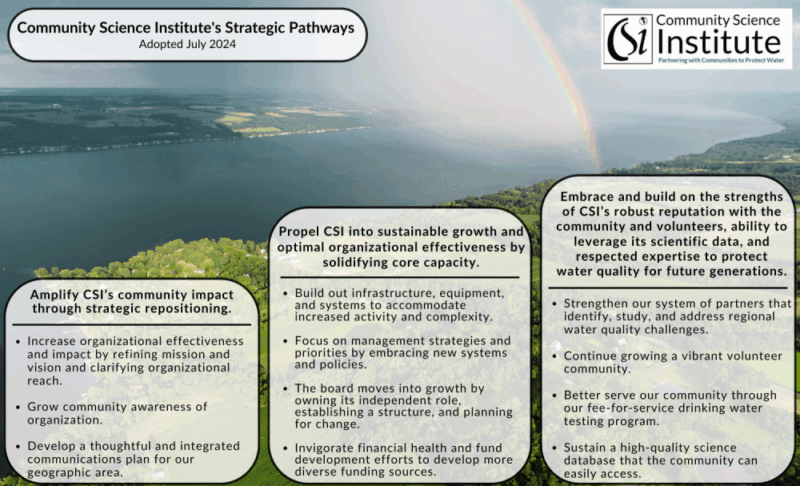
Mission: To inspire and empower communities to safeguard water resources by cultivating scientific literacy through volunteer water quality monitoring, certified laboratory analyses, and education.
Vision: Communities empowered by science to sustain, protect, and restore our shared water resources.
“To inspire and empower communities…”
We believe communities are powerful agents of change. CSI provides people with the knowledge, skills, data, and opportunities they need to understand local water quality issues and take meaningful action to protect shared water resources.
“…to safeguard water resources…”
Our work helps communities identify water quality concerns, recognize emerging threats, and make informed decisions about protecting local waterways. From tracking harmful algal blooms to monitoring stream health, CSI’s programs generate valuable data that support public health and water resource management.
“…by cultivating scientific literacy…”
Scientific literacy helps people understand how science works, evaluate evidence, and make informed decisions. Through hands-on monitoring, accessible data, and educational resources, CSI creates opportunities for community members to engage directly with the scientific process, build confidence in their understanding of water quality, and develop trust in evidence-based decision-making.
“…through volunteer water quality monitoring…”
CSI partners with more than 250 volunteers across New York State through three monitoring programs: Synoptic Sampling, Biomonitoring, and Cayuga Lake Harmful Algal Bloom Monitoring. These community scientists collect valuable water quality data, helping identify trends, investigate local concerns, and build a deeper understanding of our waterways.
“…certified laboratory analyses…”
CSI operates a New York State Department of Health Environmental Laboratory Approval Program (NYSDOH-ELAP)-certified laboratory that provides water testing services for drinking water and surface water. Our analyses produce reliable, regulatory-quality data that support public health decisions, environmental monitoring, and water resource management.
“…and education.”
Education is essential to building scientifically informed communities. CSI offers a variety of educational opportunities, including workshops, public presentations, online learning materials, and our Journey of Water summer program for children and families. These programs connect people with water science and encourage lifelong learning and environmental stewardship.
“Communities empowered by science…”
We envision communities equipped with the knowledge, tools, and confidence to understand local water quality challenges and help address them. By making science accessible and involving people directly in the process, we can strengthen community participation and support informed, collaborative solutions.
“…to sustain…”
Sustaining water quality means maintaining the chemical, physical, and biological integrity of our waterways so they can continue to support aquatic life, provide clean water, and serve the needs of people and ecosystems.
“…protect…”
Protecting water resources means preventing pollution and degradation before they occur, preserving healthy habitats, and safeguarding water quality for drinking, recreation, and wildlife.
“…and restore…”
Restoring water resources means addressing existing damage and improving degraded waterways. This may include reducing pollution, restoring habitats, and supporting practices that help ecosystems recover and prevent future harm.
“…our shared water resources.”
Our streams, lakes, and groundwater sustain communities, ecosystems, and local economies. These resources are interconnected, and their health is influenced by the actions of residents, businesses, visitors, and institutions alike. Protecting them requires shared responsibility, collaboration, and a commitment to making decisions informed by sound science.

The Office Administrator will play a vital role in supporting the smooth
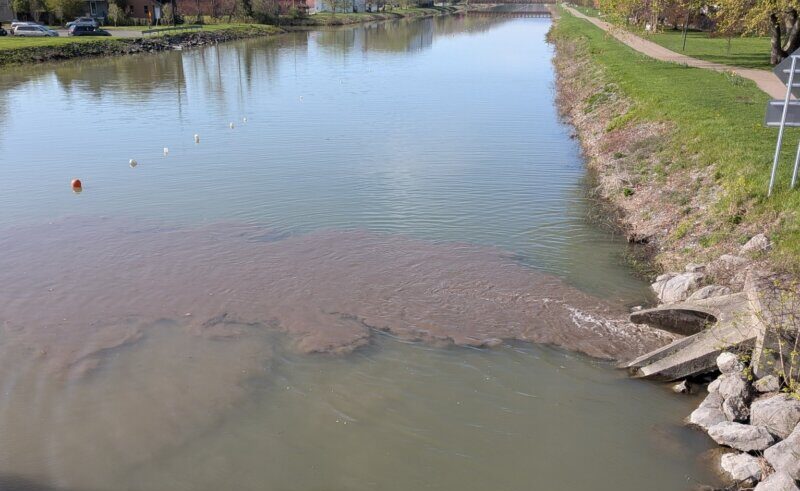
CSI’s Outreach & Programs Coordinator, Alyssa Johnson, collects a sample from Cliff