Community Science InstituteCommunity Science InstituteCommunity Science InstituteCommunity Science Institute
  • News & Events
    • CSI News and Monthly Updates
    • The Water Bulletin Newsletter
    • CSI’s Public Comments & Testimonies
    • CSI in the Media
  • Test Your Water
    • Water Testing FAQs
    • Potable and Non-Potable Water Tests & Fees
    • Instructions for Collecting and Submitting Water Samples
    • Drinking Water Resources for the General Public
    • Water Testing Assistance Program
  • Get Involved
    • Volunteer With Us!
    • Monitoring Partnerships
      • Harmful Algal Bloom Monitoring on Cayuga Lake
      • Synoptic Sampling
      • Biological Monitoring
      • Owego Creek Tributaries Monitoring Project with Trout Unlimited
      • Past CSI Monitoring Programs
        • Red Flag Monitoring
  • Outreach & Education
    • Journey of Water
      • Learning Materials
    • Public Events and Presentations
    • Publications
  • Water Quality Database
    • Database Home
    • Streams and Lakes Data
      • Cayuga Lake Region
      • Seneca Lake Region
      • Upper Susquehanna River Region
      • Select and Download Streams and Lakes Data
    • Cayuga Lake Harmful Algal Bloom Tracker
      • Select and Download Cayuga Lake HABs Data
    • Pre-Fracking Groundwater Baselines
      • Select and Download Groundwater Baselines
    • Biological Monitoring Results
    • Glossary
  • Donate
    • CSI’s Business Membership Program
      • 2026-2027 Business Membership Partners
      • 2025-2026 Business Membership Partners
  • About Us
    • CSI Frequently Asked Questions
    • Meet Our Staff
    • Meet Our Board of Directors
    • CSI’s Mission & Vision Statements
    • CSI’s DEI Statement
    • Annual Reports
    • Contact Us
    • Employment Opportunities

Chloride in Context

    Home Blog Chloride in Context
    NextPrevious

    Chloride in Context

    By Grace Haynes | Blog, Water, Water Testing | 0 comment | 31 January, 2023 | 0

    CSI's Water Quality Indicators: Chloride in Context

    As someone who drives route 13 from Cortland to Ithaca every day, I am grateful for road deicers, especially during this time of year. They are absolutely critical for keeping roads safe for drivers, pedestrians, and cyclists. In fact, road deicers reduce the rate of car accidents by at least 78%! Unfortunately, those deicers eventually run off the roads and end up in our streams in lakes, elevating chloride levels… In a recent review article published in Frontiers in Ecology and the Environment, authors explore the trend of increasing salinity of freshwater due to road deicers.

    The most common salt found in both solid and liquid road deicers is sodium chloride (NaCl), although other salts like calcium chloride (CaCl2) and magnesium chloride (MgCl2) are sometimes used as well. Over the years, the amount of NaCl applied to roads as road deicer has steadily increased and as expected, the authors find that in colder regions of the US, a substantial amount of deicing salt is being used per unit area. This is concerning because elevated chloride can be harmful to freshwater organisms and drinking water supplies. When the authors reviewed lake, stream, and wetland chloride data, they found that chloride concentrations were frequently elevated and increasing over time. The authors concluded that the Environmental Protection Agency’s (EPA’s) current thresholds for chloride (230 mg/L for chronic exposure and 860 mg/L for acute exposure) are not enough to protect water quality. The EPA’s thresholds are often exceeded and don’t account for lethal and sublethal effects of chloride below these thresholds that have been documented in the literature. Further, road salts can increase the concentration of other contaminants present in water; these interactions are not taken into account in EPA thresholds either.

    Drinking water is impacted by chloride contamination as well. One New York study found that 24% of private wells were contaminated by deicing salts. This is concerning beyond the direct impacts of sodium on human health and chloride on the taste of drinking water. NaCl can also mobilize heavy metals (e.g. lead, mercury) and radium and in turn increase concentrations of these harmful substances in drinking water.

    Though there are alternatives to deicers, these carry their own risks. Instead of advocating for a switch to a different system entirely, Hintz and colleagues suggest applying best management practices: pre-wetting roads before snow and ice arrive and using live-edge snowplows can decrease the amount of salt needed. Equipment should also be calibrated properly according to the specifics of a given storm to only apply as much salt as is actually necessary. Adhering to these best management practices may help us to strike a balance between the safety offered to drivers by road deicing and the dangers associated with too much deicing. Want to learn more? Check out the article yourself for more details!


    -Grascen Shidemantle, Executive Director
    Share
    No tags.

    Related Posts

    • 8/15/24: Guest Opinion: Correcting the Record on Cayuga Lake Pollution

      By Alyssa Johnson | 0 comment

      From the desk of CSI Executive Director, Grascen Shidemantle, PhD.  To visit this article on the Ithaca Times website, visit: 8/15/24: Guest Opinion: Correcting the Record on Cayuga Lake Pollution To read the 8/8/24 articleRead more

    • From Community Report to Regulatory Action

      By Grascen Shidemantle | 0 comment

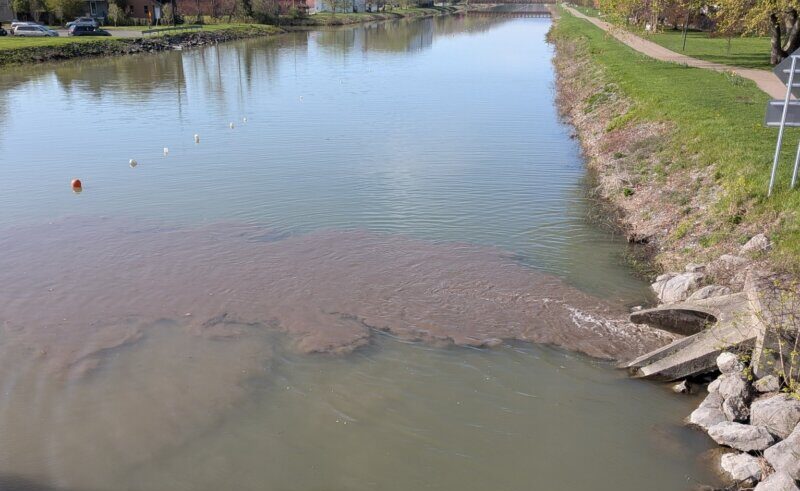
      CSI’s Outreach & Programs Coordinator, Alyssa Johnson, collects a sample from Cliff Brook Park on 4/23/26. On April 23, CSI received an email from a concerned community member who had noticed a cloudy, dark brownRead more

      Loading

    • No Fish Too Big, No Macroinvertebrate Too Small: A Celebration of Interdisciplinary Environmental Science

      By Jared Thomas | 0 comment

      The SUNY College of Environmental Science and Forestry (ESF) held its first annual meeting of their University Chapter of the American Fisheries Society. Their motto, “No Fish too Big, No Macroinvertebrate too Small”, perfectly encapsulatedRead more

    • Why we volunteer as HAB Harriers

      By Alyssa Johnson | 0 comment

      Please enjoy this article written by one of CSI’s longterm HABs Harriers, James Edwards. This article was first included in the 7th HABs Newsletter of the 2025 season, compiled by the Cayuga Lake Watershed Network.Read more

    • CLWN: Fall 2024 Community Conference Series

      By Alyssa Johnson | 0 comment

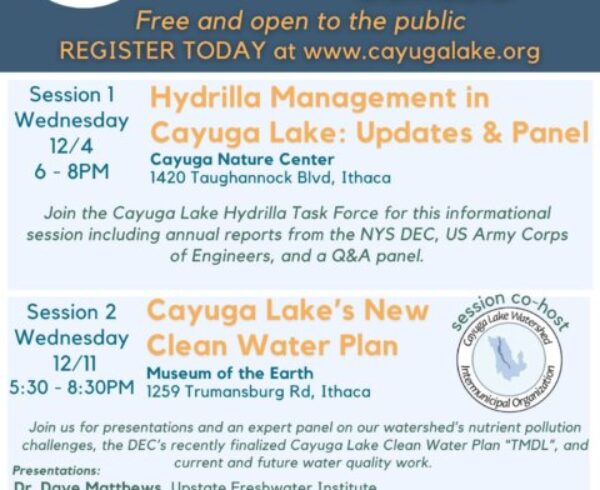
      On December 4th, join Cayuga Lake Watershed Network and the Cayuga Lake Hydrilla Task Force for an informational session that will include background on the program, annual reports from the NYSDEC, the US Army CorpsRead more

    Leave a Comment

    Cancel reply

    You must be logged in to post a comment.

    NextPrevious

    Recent Posts

    • CSI is hiring: Office Administrator
    • From Community Report to Regulatory Action
    • Upcoming Harmful Algal Bloom Presentations
    • CSI’s 2026 Data Jam: Investigating Local Water Quality
    • No Fish Too Big, No Macroinvertebrate Too Small: A Celebration of Interdisciplinary Environmental Science

    Recent Comments

    • Nathaniel Launer on Harmful Algal Blooms (HABs) on Cayuga Lake: A Public Presentation at Lansing Town Hall
    • Nathaniel Launer on The 2019 Harmful Algal Bloom (HABs) Monitoring Program on Cayuga Lake
    • sr.yurmagazine.com on Presentation at the Cayuga Lake Watershed Network 2019 Fall Community Conference
    • Justin Hamilton on The 2019 Harmful Algal Bloom (HABs) Monitoring Program on Cayuga Lake
    • SEO Service on The Fall 2019 edition of The Water Bulletin

    Archives

    • July 2026
    • May 2026
    • February 2026
    • January 2026
    • August 2025
    • May 2025
    • March 2025
    • December 2024
    • November 2024
    • August 2024
    • January 2024
    • June 2023
    • January 2023
    • September 2022
    • August 2022
    • June 2022
    • February 2022
    • January 2022
    • December 2021
    • November 2021
    • October 2021
    • September 2021
    • August 2021
    • April 2021
    • January 2021
    • December 2020
    • November 2020
    • September 2020
    • August 2020
    • July 2020
    • March 2020
    • February 2020
    • December 2019
    • November 2019
    • October 2019
    • September 2019
    • August 2019
    • May 2019
    • April 2019
    • March 2019
    • December 2018
    • November 2018
    • October 2018
    • September 2018
    • July 2018
    • May 2018
    • March 2018
    • December 2017
    • November 2017
    • October 2017
    • September 2017
    • August 2017
    • July 2017
    • June 2017
    • May 2017
    • April 2017
    • March 2017
    • November 2016
    • October 2016
    • August 2016
    • April 2016
    • March 2016
    • February 2016
    • October 2015
    • June 2015
    • May 2015
    • April 2015
    • March 2015
    • February 2015
    • January 2015
    • December 2014
    • November 2014
    • October 2014
    • September 2014
    • August 2014
    • July 2014
    • June 2014
    • May 2014
    • April 2014
    • March 2014
    • February 2014
    • January 2014
    • December 2013
    • October 2013
    • April 2013
    • March 2013
    • August 2012
    • July 2012
    • June 2012
    • April 2012

    Categories

    • "Red Flag" Monitoring
    • Biological Monitoring (BMI)
    • Blog
    • Cayuga Lake Watershed
    • Donation
    • Events
    • Groundwater
    • Harmful Algal Blooms
    • Help
    • Human
    • Laboratory
    • Nature
    • News
    • Outreach
    • Uncategorized
    • Volunteering
    • Water
    • Water Testing

    Meta

    • Log in
    • Entries feed
    • Comments feed
    • WordPress.org

    Connect With Us

    The Community Science Institute
    Langmuir Lab Building, Box 1044
    95 Brown Rd. Ithaca, NY 14850

    (607) 257-6606
    info@communityscience.org

    Support Our Work

    Donate

    Recent Posts

    • CSI is hiring: Office Administrator

      The Office Administrator will play a vital role in supporting the smooth

      Loading

      20 July, 2026
    • From Community Report to Regulatory Action

      CSI’s Outreach & Programs Coordinator, Alyssa Johnson, collects a sample from Cliff

      Loading

      6 May, 2026
    • News & Events
      • CSI News and Monthly Updates
      • The Water Bulletin Newsletter
      • CSI’s Public Comments & Testimonies
      • CSI in the Media
    • Test Your Water
      • Water Testing FAQs
      • Potable and Non-Potable Water Tests & Fees
      • Instructions for Collecting and Submitting Water Samples
      • Drinking Water Resources for the General Public
      • Water Testing Assistance Program
    • Get Involved
      • Volunteer With Us!
      • Monitoring Partnerships
        • Harmful Algal Bloom Monitoring on Cayuga Lake
        • Synoptic Sampling
        • Biological Monitoring
        • Owego Creek Tributaries Monitoring Project with Trout Unlimited
        • Past CSI Monitoring Programs
          • Red Flag Monitoring
    • Outreach & Education
      • Journey of Water
        • Learning Materials
      • Public Events and Presentations
      • Publications
    • Water Quality Database
      • Database Home
      • Streams and Lakes Data
        • Cayuga Lake Region
        • Seneca Lake Region
        • Upper Susquehanna River Region
        • Select and Download Streams and Lakes Data
      • Cayuga Lake Harmful Algal Bloom Tracker
        • Select and Download Cayuga Lake HABs Data
      • Pre-Fracking Groundwater Baselines
        • Select and Download Groundwater Baselines
      • Biological Monitoring Results
      • Glossary
    • Donate
      • CSI’s Business Membership Program
        • 2026-2027 Business Membership Partners
        • 2025-2026 Business Membership Partners
    • About Us
      • CSI Frequently Asked Questions
      • Meet Our Staff
      • Meet Our Board of Directors
      • CSI’s Mission & Vision Statements
      • CSI’s DEI Statement
      • Annual Reports
      • Contact Us
      • Employment Opportunities
    Copyright 2015 Tranmautritam's team | All Rights Reserved
    • News & Events
      • CSI News and Monthly Updates
      • The Water Bulletin Newsletter
      • CSI’s Public Comments & Testimonies
      • CSI in the Media
    • Test Your Water
      • Water Testing FAQs
      • Potable and Non-Potable Water Tests & Fees
      • Instructions for Collecting and Submitting Water Samples
      • Drinking Water Resources for the General Public
      • Water Testing Assistance Program
    • Get Involved
      • Volunteer With Us!
      • Monitoring Partnerships
        • Harmful Algal Bloom Monitoring on Cayuga Lake
        • Synoptic Sampling
        • Biological Monitoring
        • Owego Creek Tributaries Monitoring Project with Trout Unlimited
        • Past CSI Monitoring Programs
          • Red Flag Monitoring
    • Outreach & Education
      • Journey of Water
        • Learning Materials
      • Public Events and Presentations
      • Publications
    • Water Quality Database
      • Database Home
      • Streams and Lakes Data
        • Cayuga Lake Region
        • Seneca Lake Region
        • Upper Susquehanna River Region
        • Select and Download Streams and Lakes Data
      • Cayuga Lake Harmful Algal Bloom Tracker
        • Select and Download Cayuga Lake HABs Data
      • Pre-Fracking Groundwater Baselines
        • Select and Download Groundwater Baselines
      • Biological Monitoring Results
      • Glossary
    • Donate
      • CSI’s Business Membership Program
        • 2026-2027 Business Membership Partners
        • 2025-2026 Business Membership Partners
    • About Us
      • CSI Frequently Asked Questions
      • Meet Our Staff
      • Meet Our Board of Directors
      • CSI’s Mission & Vision Statements
      • CSI’s DEI Statement
      • Annual Reports
      • Contact Us
      • Employment Opportunities
    Community Science Institute
    X