Community Science InstituteCommunity Science InstituteCommunity Science InstituteCommunity Science Institute
  • News & Events
    • CSI News and Monthly Updates
    • The Water Bulletin Newsletter
    • CSI’s Public Comments & Testimonies
    • CSI in the Media
  • Test Your Water
    • Water Testing FAQs
    • Potable and Non-Potable Water Tests & Fees
    • Instructions for Collecting and Submitting Water Samples
    • Drinking Water Resources for the General Public
    • Water Testing Assistance Program
  • Get Involved
    • Volunteer With Us!
    • Monitoring Partnerships
      • Harmful Algal Bloom Monitoring on Cayuga Lake
      • Synoptic Sampling
      • Biological Monitoring
      • Owego Creek Tributaries Monitoring Project with Trout Unlimited
      • Past CSI Monitoring Programs
        • Red Flag Monitoring
  • Outreach & Education
    • Journey of Water
      • Learning Materials
    • Public Events and Presentations
    • Publications
  • Water Quality Database
    • Database Home
    • Streams and Lakes Data
      • Cayuga Lake Region
      • Seneca Lake Region
      • Upper Susquehanna River Region
      • Select and Download Streams and Lakes Data
    • Cayuga Lake Harmful Algal Bloom Tracker
      • Select and Download Cayuga Lake HABs Data
    • Pre-Fracking Groundwater Baselines
      • Select and Download Groundwater Baselines
    • Biological Monitoring Results
    • Glossary
  • Donate
    • CSI’s Business Membership Program
      • 2026-2027 Business Membership Partners
      • 2025-2026 Business Membership Partners
  • About Us
    • CSI Frequently Asked Questions
    • Meet Our Staff
    • Meet Our Board of Directors
    • CSI’s Mission & Vision Statements
    • CSI’s DEI Statement
    • Annual Reports
    • Contact Us
    • Employment Opportunities

Why we volunteer as HAB Harriers

    Home Blog Why we volunteer as HAB Harriers
    NextPrevious

    Why we volunteer as HAB Harriers

    By Alyssa Johnson | Blog, Harmful Algal Blooms, Nature, News, Volunteering, Water Testing | 0 comment | 18 August, 2025 | 0

    Please enjoy this article written by one of CSI’s longterm HABs Harriers, James Edwards. This article was first included in the 7th HABs Newsletter of the 2025 season, compiled by the Cayuga Lake Watershed Network. James has been monitoring for harmful algal blooms on Cayuga Lake since our monitoring program began in 2018 on the western shoreline between Taughannock and Frontenac Point.

    I have enjoyed being around the forests and waters of the Finger Lakes for my entire life.  Since permanently locating in the Ithaca area in 1978, my wife Elise and I have enjoyed Cayuga Lake by swimming, diving, paddling and sailing at every opportunity. My favorite place on the lake is the North Point of Taughannock – specifically where the shoreline meets the block of the fascinating Tully Limestone. The occurrence of HABs in the Finger Lakes first was in my radar as a frequent lake user, and also through my work with a local environmental consulting firm. I attended most of the initial HABs presentations by the NYSDEC, the NYSDOH, Syracuse University, and the Finger Lakes Institute. 

    It was from these presentations that I learned more about CLWN, CSI, and the newly formed HABs Harrier program. I quickly volunteered for my favorite lake spot – North Point to Lower Barton Camp. Soon after, my wife and I saw a bloom unfold at a cottage we rented in July 2017 at the Busy Bee, in Sheldrake on the west shore. An acute micro-burst event loaded stormwater into the lake, and then we watched the iridescent, flashing, paint-like, rapidly sinking/rising blue-green bloom develop and extend from Sheldrake across to the east shore.

    For my monitoring, I am frequently accompanied by Elise and energetic Lab Thora. We usually launch paddle-boats from North Point or the Barton Camp, and sometimes walk the shoreline around Barton Camp and the cottage road to the south. The parts I most enjoy about being a Harrier are of course my time at the Lake, and also being part of the group that collects samples and data regarding this threat. I believe it is critical to have any and all data collected and available for use by all the involved parties working on managing and regulating this threat to both the lake users and the lake habitat.  

    There have been several interesting sightings during my paddles. I found several Hellbender salamanders on the North Shore – I believe a natural die-off. It was fascinating to watch a fisherman catch a 5-6 foot sturgeon at the point [note to readers: It is illegal to fish for, or keep Atlantic Sturgeon. If you accidentally hook a sturgeon, be prepared to catch and release with great care!]. I sometimes play tag with a white mink that hunts in the blocks of the limestone that extends north from Taughannock. I am always looking for a couple of my favorite birds on the paddles – the diving Loons and the ever-present, circling Turkey Vultures. 

    I would strongly encourage anyone who lives in the area and cares for the lake watershed to become a Harrier volunteer. The collection of data and widespread awareness of the HABs threat is, to me, critical in moving the involved management parties forward with possible regulatory actions and best practices to protect the watershed. It would be great to see the volunteer network and CSI’s program grow for these critical monitoring and laboratory analysis tasks.

    Share
    Blooms on Cayuga Lake, Blue-green algae, Cayuga Lake, Cyanobacteria, HABs, Harmful Algal Bloom, Volunteer

    Alyssa Johnson

    More posts by Alyssa Johnson

    Related Posts

    • From Community Report to Regulatory Action

      By Grascen Shidemantle | 0 comment

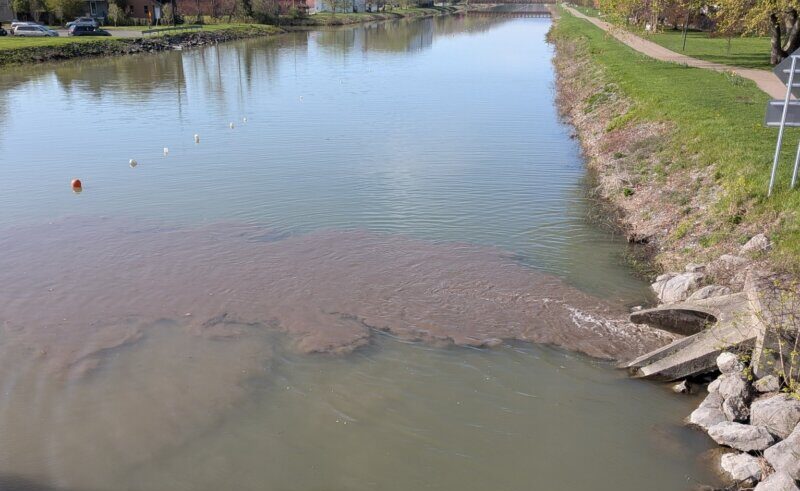
      CSI’s Outreach & Programs Coordinator, Alyssa Johnson, collects a sample from Cliff Brook Park on 4/23/26. On April 23, CSI received an email from a concerned community member who had noticed a cloudy, dark brownRead more

      Loading

    • Save the Date: “HAB-by Hour” at Cayuga Shoreline

      By Alyssa Johnson | 0 comment

      Read more

    • 8/15/24: Guest Opinion: Correcting the Record on Cayuga Lake Pollution

      By Alyssa Johnson | 0 comment

      From the desk of CSI Executive Director, Grascen Shidemantle, PhD.  To visit this article on the Ithaca Times website, visit: 8/15/24: Guest Opinion: Correcting the Record on Cayuga Lake Pollution To read the 8/8/24 articleRead more

    • Community Science Institute receives generous gift directed by the Tapan Mitra Estate to support environmental education in our community

      By Grace Haynes | 0 comment

      At Community Science Institute (CSI), environmental education is a core part of our mission to empower residents to become stewards of their local water resources. Thanks to a generous gift from the Community Foundation ofRead more

    • Help Monitor Harmful Algal Blooms on Cayuga Lake in 2021

      By abnerx | 0 comment

      Have you seen or heard of harmful algal blooms (HABs)? These toxic blooms of cyanobacteria can present a risk to those who use and enjoy Cayuga Lake! In response to this water quality threat, theRead more

      Loading

    Leave a Comment

    Cancel reply

    You must be logged in to post a comment.

    NextPrevious

    Recent Posts

    • CSI is hiring: Office Administrator
    • From Community Report to Regulatory Action
    • Upcoming Harmful Algal Bloom Presentations
    • CSI’s 2026 Data Jam: Investigating Local Water Quality
    • No Fish Too Big, No Macroinvertebrate Too Small: A Celebration of Interdisciplinary Environmental Science

    Recent Comments

    • Nathaniel Launer on Harmful Algal Blooms (HABs) on Cayuga Lake: A Public Presentation at Lansing Town Hall
    • Nathaniel Launer on The 2019 Harmful Algal Bloom (HABs) Monitoring Program on Cayuga Lake
    • sr.yurmagazine.com on Presentation at the Cayuga Lake Watershed Network 2019 Fall Community Conference
    • Justin Hamilton on The 2019 Harmful Algal Bloom (HABs) Monitoring Program on Cayuga Lake
    • SEO Service on The Fall 2019 edition of The Water Bulletin

    Archives

    • July 2026
    • May 2026
    • February 2026
    • January 2026
    • August 2025
    • May 2025
    • March 2025
    • December 2024
    • November 2024
    • August 2024
    • January 2024
    • June 2023
    • January 2023
    • September 2022
    • August 2022
    • June 2022
    • February 2022
    • January 2022
    • December 2021
    • November 2021
    • October 2021
    • September 2021
    • August 2021
    • April 2021
    • January 2021
    • December 2020
    • November 2020
    • September 2020
    • August 2020
    • July 2020
    • March 2020
    • February 2020
    • December 2019
    • November 2019
    • October 2019
    • September 2019
    • August 2019
    • May 2019
    • April 2019
    • March 2019
    • December 2018
    • November 2018
    • October 2018
    • September 2018
    • July 2018
    • May 2018
    • March 2018
    • December 2017
    • November 2017
    • October 2017
    • September 2017
    • August 2017
    • July 2017
    • June 2017
    • May 2017
    • April 2017
    • March 2017
    • November 2016
    • October 2016
    • August 2016
    • April 2016
    • March 2016
    • February 2016
    • October 2015
    • June 2015
    • May 2015
    • April 2015
    • March 2015
    • February 2015
    • January 2015
    • December 2014
    • November 2014
    • October 2014
    • September 2014
    • August 2014
    • July 2014
    • June 2014
    • May 2014
    • April 2014
    • March 2014
    • February 2014
    • January 2014
    • December 2013
    • October 2013
    • April 2013
    • March 2013
    • August 2012
    • July 2012
    • June 2012
    • April 2012

    Categories

    • "Red Flag" Monitoring
    • Biological Monitoring (BMI)
    • Blog
    • Cayuga Lake Watershed
    • Donation
    • Events
    • Groundwater
    • Harmful Algal Blooms
    • Help
    • Human
    • Laboratory
    • Nature
    • News
    • Outreach
    • Uncategorized
    • Volunteering
    • Water
    • Water Testing

    Meta

    • Log in
    • Entries feed
    • Comments feed
    • WordPress.org

    Connect With Us

    The Community Science Institute
    Langmuir Lab Building, Box 1044
    95 Brown Rd. Ithaca, NY 14850

    (607) 257-6606
    info@communityscience.org

    Support Our Work

    Donate

    Recent Posts

    • CSI is hiring: Office Administrator

      The Office Administrator will play a vital role in supporting the smooth

      Loading

      20 July, 2026
    • From Community Report to Regulatory Action

      CSI’s Outreach & Programs Coordinator, Alyssa Johnson, collects a sample from Cliff

      Loading

      6 May, 2026
    • News & Events
      • CSI News and Monthly Updates
      • The Water Bulletin Newsletter
      • CSI’s Public Comments & Testimonies
      • CSI in the Media
    • Test Your Water
      • Water Testing FAQs
      • Potable and Non-Potable Water Tests & Fees
      • Instructions for Collecting and Submitting Water Samples
      • Drinking Water Resources for the General Public
      • Water Testing Assistance Program
    • Get Involved
      • Volunteer With Us!
      • Monitoring Partnerships
        • Harmful Algal Bloom Monitoring on Cayuga Lake
        • Synoptic Sampling
        • Biological Monitoring
        • Owego Creek Tributaries Monitoring Project with Trout Unlimited
        • Past CSI Monitoring Programs
          • Red Flag Monitoring
    • Outreach & Education
      • Journey of Water
        • Learning Materials
      • Public Events and Presentations
      • Publications
    • Water Quality Database
      • Database Home
      • Streams and Lakes Data
        • Cayuga Lake Region
        • Seneca Lake Region
        • Upper Susquehanna River Region
        • Select and Download Streams and Lakes Data
      • Cayuga Lake Harmful Algal Bloom Tracker
        • Select and Download Cayuga Lake HABs Data
      • Pre-Fracking Groundwater Baselines
        • Select and Download Groundwater Baselines
      • Biological Monitoring Results
      • Glossary
    • Donate
      • CSI’s Business Membership Program
        • 2026-2027 Business Membership Partners
        • 2025-2026 Business Membership Partners
    • About Us
      • CSI Frequently Asked Questions
      • Meet Our Staff
      • Meet Our Board of Directors
      • CSI’s Mission & Vision Statements
      • CSI’s DEI Statement
      • Annual Reports
      • Contact Us
      • Employment Opportunities
    Copyright 2015 Tranmautritam's team | All Rights Reserved
    • News & Events
      • CSI News and Monthly Updates
      • The Water Bulletin Newsletter
      • CSI’s Public Comments & Testimonies
      • CSI in the Media
    • Test Your Water
      • Water Testing FAQs
      • Potable and Non-Potable Water Tests & Fees
      • Instructions for Collecting and Submitting Water Samples
      • Drinking Water Resources for the General Public
      • Water Testing Assistance Program
    • Get Involved
      • Volunteer With Us!
      • Monitoring Partnerships
        • Harmful Algal Bloom Monitoring on Cayuga Lake
        • Synoptic Sampling
        • Biological Monitoring
        • Owego Creek Tributaries Monitoring Project with Trout Unlimited
        • Past CSI Monitoring Programs
          • Red Flag Monitoring
    • Outreach & Education
      • Journey of Water
        • Learning Materials
      • Public Events and Presentations
      • Publications
    • Water Quality Database
      • Database Home
      • Streams and Lakes Data
        • Cayuga Lake Region
        • Seneca Lake Region
        • Upper Susquehanna River Region
        • Select and Download Streams and Lakes Data
      • Cayuga Lake Harmful Algal Bloom Tracker
        • Select and Download Cayuga Lake HABs Data
      • Pre-Fracking Groundwater Baselines
        • Select and Download Groundwater Baselines
      • Biological Monitoring Results
      • Glossary
    • Donate
      • CSI’s Business Membership Program
        • 2026-2027 Business Membership Partners
        • 2025-2026 Business Membership Partners
    • About Us
      • CSI Frequently Asked Questions
      • Meet Our Staff
      • Meet Our Board of Directors
      • CSI’s Mission & Vision Statements
      • CSI’s DEI Statement
      • Annual Reports
      • Contact Us
      • Employment Opportunities
    Community Science Institute
    X