Community Science InstituteCommunity Science InstituteCommunity Science InstituteCommunity Science Institute
  • Get Involved
    • Volunteer With Us!
    • Monitoring Partnerships
      • Harmful Algal Bloom Monitoring on Cayuga Lake
      • Synoptic Sampling
      • Biological Monitoring
      • Owego Creek Tributaries Monitoring Project with Trout Unlimited
      • Past CSI Monitoring Programs
        • Red Flag Monitoring
    • Outreach and Education
      • Journey of Water
        • Learning Materials
      • CSI News and Monthly Updates
      • The Water Bulletin Newsletter
      • CSI’s Public Comments & Testimonies
      • Public Events and Presentations
      • Publications
  • I want to test my water
    • Potable and Non-Potable Water Tests & Fees
    • Instructions for Collecting and Submitting Water Samples
    • Drinking Water Resources for the General Public
    • Water Testing Assistance Program
  • CSI Water Quality Data
    • Database Home
    • Streams and Lakes Data
      • Cayuga Lake Region
      • Seneca Lake Region
      • Upper Susquehanna River Region
      • Select and Download Streams and Lakes Data
    • HABs Database
      • Select and Download Cayuga Lake HABs Data
    • Pre-Fracking Groundwater Baselines
      • Select and Download Groundwater Baselines
    • Biological Monitoring Results
    • Glossary
  • About Us
    • Meet Our Staff
    • Employment Opportunities
    • Meet Our Board of Directors
    • Annual Reports
    • Frequently Asked Questions
    • Contact Us
  • Donate
    • CSI’s Business Membership Program
    • 2025-2026 Business Membership Partners

Instructions for Collecting and Submitting Water Samples

  • Potable and Non-Potable Water Tests & Fees
  • Non-Potable Water Tests & Fees
  • Water Testing Assistance Program
  • Instructions for Collecting and Submitting Water Samples
Home Certified Water Testing Instructions for Collecting and Submitting Water Samples

Instructions for Collecting and Submitting Drinking Water Samples for Bacterial Analysis

Collecting a water sample may seem simple, but following clear, science-based steps is essential to ensure accurate results. This page provides a detailed guide for collecting and submitting drinking water samples for bacteria testing, expanding on the instructions included on CSI’s Request for Certified Analysis of Bacteria in Drinking Water forms for both chlorinated and non-chlorinated water.

By following these step-by-step directions, you can help ensure your sample provides the most reliable results possible.
1)  Pick Up the Correct Sample Bottle

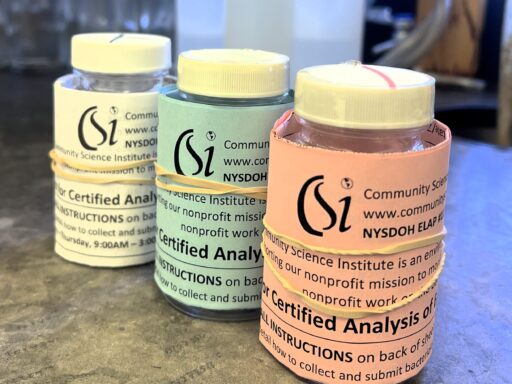
  • Obtain a sterile bottle at the CSI lab (weekdays, 9:00 AM–5:00 PM), or at the service desk of Trumansburg Shur-Save or the GreenStar Co-op on Cascadilla Street.
    • If you routinely chlorinate your drinking water or you are on municipal water, select a sample bottle with a pink wrapper.
    • If your drinking water is not treated with chlorine, select a sample bottle with a blue wrapper.
    • If you do not know if your water is chlorinated or not, please call us to discuss.
  • Sample bottles for chlorinated water (pink) will have a small tablet in it that may be free and rattling inside, or sometimes it can disintegrate and become stuck to the bottle wall. This tablet is necessary and should not be dumped out. Non-chlorinated (blue) sample bottles should not have anything inside the bottle.
  • Do not open/break the sterility seal on the bottle until you’re ready to collect your sample.

2)  Disinfecting Your Faucet/Tap

  • If there is a faucet aerator or screen, remove it before proceeding.
  • Using a paper towel soaked in rubbing alcohol or bleach (unscented only), clean the inside and outside of the faucet thoroughly. This is important to do so that no residual bacteria found on the faucet contaminates your sample.
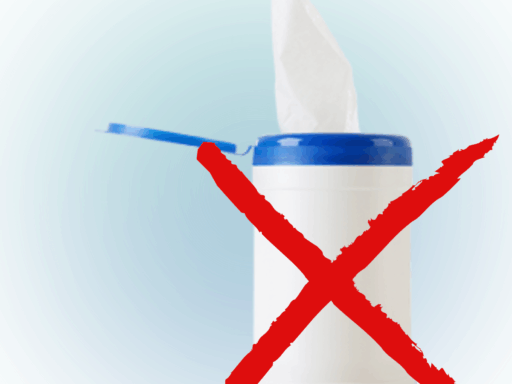
    • Please do not use disinfection wipes as they often leave residue behind which can affect the results of the testWait 10 minutes before collecting your sample to allow the disinfection process to work.
  • Wait 10 minutes before collecting your sample to allow the disinfection process to work.

3)  Collecting the Sample

  • After the 10-minute wait, run cold water for 10 minutes to flush out any residual rubbing alcohol/bleach, then reduce the flow to prevent splashing.
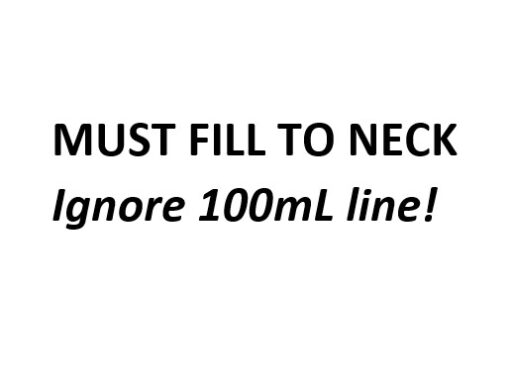
  • Fill the sterile bottle to the neck, just below the cap – ignore the 100 mL line on the bottle. Samples under 100 mL will not be accepted as this is not an adequate volume of water needed for bacteriological analysis.
  • Keep the sample cold, but do not freeze it! Even partially frozen samples will not be accepted.
  • Fill out the accompanying paperwork and record the date and time collected on the bottle’s label.
  • Transport and deliver the sample to the lab using wet ice (ice cubes) or blue ice (gel packs) to begin the cooling process immediately. During the colder months, insulate the sample from direct ice contact using bubble wrap, paper towel, or similar material to provide a buffer and prevent freezing.

Important Notes:

  • Each water sample submitted for bacteria testing is checked for the presence of residual chlorine. If chlorine is present in your water sample, it can kill bacteria and give a false negative. If chlorine is detected, you will need to recollect your sample. Standard fees apply to retests if the sample is rejected on the basis of chlorine being present in the sample.
  • If your well was recently shocked, collect an extra container (a clean mason jar, water bottle, etc.) of water from the same disinfected tap. Be sure to fill your container to the top. CSI will test this extra sample for residual chlorine at no charge before accepting your sample for bacteria testing.
  • If the sample is not on ice at sample receipt (regardless of how cold it is outside), the following footnote will be added to your report per the guidelines set forth by our accrediting body: “Sample did not meet NELAC (National Environmental Laboratory Accreditation Conference) acceptance requirements.”
  • A bacteria test is required for most home sales. We strongly advise that you collect and submit your sample well in advance of your closing date to avoid any delays in the event that your sample fails. 

4)  Delivering the Sample

  • Drop off at the CSI lab Monday–Thursday, 9:00 AM–3:00 PM. Note that CSI is closed for all federal holidays and the week between Christmas Day and New Years Day. Check the CSI website and social media for closure notices.
  • Samples must be dropped off the same day they are collected. Bacteriological samples will not be accepted on Fridays.
  • Payment is due at drop-off and we accept cash, checks, and all major credit cards. Checks should be made payable to Community Science Institute. Note that card payments are subject to additional fees. See CSI’s Potable and Non-Potable Water Tests and Fees website for current credit card pricing.

5)  Failed Sample Notification

If Total coliform/E. coli bacteria are detected, CSI will notify you by phone the day after you dropped off your sample between 4:00 – 5:00 PM. Otherwise, you will receive your report in 10 business days, unless a rush order is selected and paid for at the time of sample drop off.

Connect With Us

The Community Science Institute
Langmuir Lab Building, Box 1044
95 Brown Rd. Ithaca, NY 14850

(607) 257-6606
info@communityscience.org

Support Our Work

Donate

Recent Posts

  • Why we volunteer as HAB Harriers

    Please enjoy this article written by one of CSI’s longterm HABs Harriers,

    18 August, 2025
  • Save the Date: “HAB-by Hour” at Cayuga Shoreline

    13 May, 2025
Copyright 2007-2025 Community Science Institute
  • Get Involved
    • Volunteer With Us!
    • Monitoring Partnerships
      • Harmful Algal Bloom Monitoring on Cayuga Lake
      • Synoptic Sampling
      • Biological Monitoring
      • Owego Creek Tributaries Monitoring Project with Trout Unlimited
      • Past CSI Monitoring Programs
        • Red Flag Monitoring
    • Outreach and Education
      • Journey of Water
        • Learning Materials
      • CSI News and Monthly Updates
      • The Water Bulletin Newsletter
      • CSI’s Public Comments & Testimonies
      • Public Events and Presentations
      • Publications
  • I want to test my water
    • Potable and Non-Potable Water Tests & Fees
    • Instructions for Collecting and Submitting Water Samples
    • Drinking Water Resources for the General Public
    • Water Testing Assistance Program
  • CSI Water Quality Data
    • Database Home
    • Streams and Lakes Data
      • Cayuga Lake Region
      • Seneca Lake Region
      • Upper Susquehanna River Region
      • Select and Download Streams and Lakes Data
    • HABs Database
      • Select and Download Cayuga Lake HABs Data
    • Pre-Fracking Groundwater Baselines
      • Select and Download Groundwater Baselines
    • Biological Monitoring Results
    • Glossary
  • About Us
    • Meet Our Staff
    • Employment Opportunities
    • Meet Our Board of Directors
    • Annual Reports
    • Frequently Asked Questions
    • Contact Us
  • Donate
    • CSI’s Business Membership Program
    • 2025-2026 Business Membership Partners
Community Science Institute
X